2022 is officially going to be the year the Broadhursts became Presbyterian! Many friends and family members are curious to how we came to these newfound theological convictions related to infant baptism specifically. So I plan to post from time to time about why I’ve come to believe infant baptism (paedobaptism) is actually the clear Biblical teaching as opposed to believers-only baptism (credobaptism).
First, let me clarify that Presbyterians also agree with ‘believers baptism’. Anyone who has never been baptized and comes to place their faith in Christ for salvation should be baptized. But a primary difference is that we believe Scripture also teaches that the children – or household – of believers should be baptized as well. In many ways the view is more about household baptism (oikobaptism) than merely infant baptism. So let me start by explaining what we see in Scripture as “the household principle”.
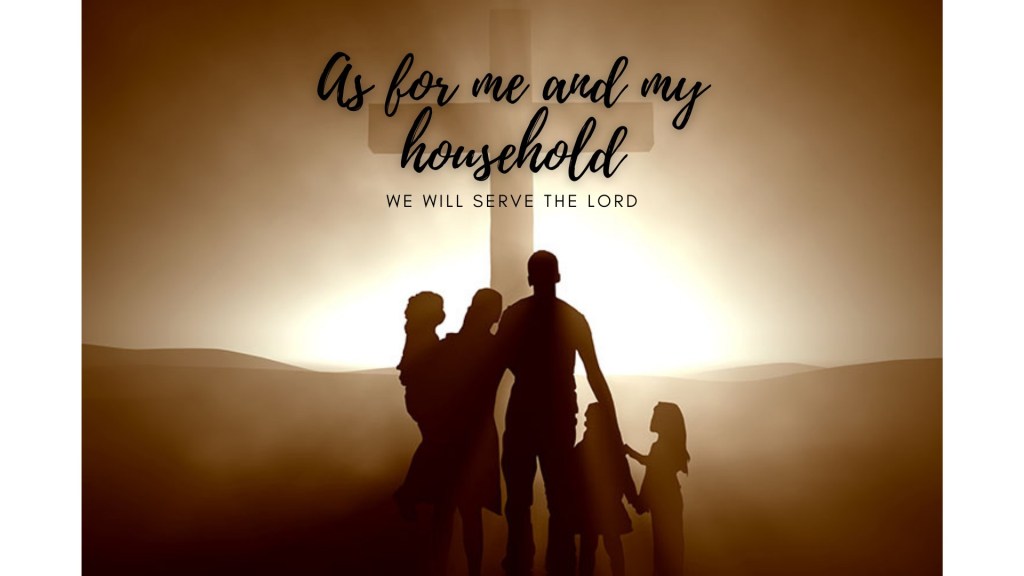
Throughout Scripture we see that God has operated not merely through individuals – but through households, i.e. believers and their children. In Genesis 17, we read that the covenant God made with Abraham was to be a God to him and to his children and that through Abraham all the families of the earth would be blessed. We read continually throughout the Scriptures of the importance of households in relation to God. Just think of one of the most famous verses in many Christian homes – Joshua 24:15b “But as for me and my house[hold], we will serve the Lord.” Joshua as the covenant head of his family was speaking on behalf of his family to say – our family isn’t going to follow any other gods but the one to whom we belong – Yahweh.
Then we get to Acts 2 and we see that Peter intentionally uses language to harken back to the same household principle – specifically the Abrahamic covenant – when he says “For the promise is for you and for your children and for all who are far off, everyone whom the Lord our God calls to himself.” Acts 2:39. And then we go on to read in the New Testament of whole households being baptized, including Cornelius’ household in Acts 10, Lydia’s household in Acts 16, the Philippians Jailer’s household also in Acts 16, Crispus’ household in Acts 18, and Stephanas’ household in 1 Corinthians 1. As a baptist I would often argue that there’s no verse that says infants were definitely to be included. But Reformed/Presbyterian folks aren’t arguing for a specific verse that says “thou shalt baptize babies of believers”, rather we’re saying it’s about a hermeneutic principle for how we read Scripture and how God interacts with his people. His people – both Israel of old and the Church as it is today – were composed of believers and their children.
Finally, a particularly important passage comes in 1 Corinthians 7 where we read that believing/‘holy’ spouses are not defiled by unbelieving/‘unclean’ spouses but rather the reverse occurs. And the argument Paul uses to justify this – that which he claims is really a sort of common knowledge – is that this must be true “otherwise your children would be unclean, but as it is, they are holy.” 1 Cor. 7:14. None of us would argue that merely being born in to a Christian family makes someone ‘saved’ or inwardly regenerate (born again). So holy here means something else. It means ‘set apart’ – just as there were holy days or holy places of worship there were also holy people. Set apart for belonging to God. So here again, we see the importance of households in relating to God.
So why does all this household stuff matter when it comes to infant baptism? Because the sign given to mark off the people of God in the Old Testament as set apart and belonging to him was circumcision. And in the New Testament the sign given to mark off the people of God as set apart and belonging to him is now baptism. I’ll write more on this connection in the future, but if for thousands of years the children of believers were included in the covenant people of God then when we come to the New Testament the argument should not be – “Where’s the verse that says infants should be baptized/the children of believers should be included?” But rather the better question is “Where’s the verse that says the children of believers should no longer be included in God’s covenant people and the verse that says they should not receive the sign of that covenant (i.e. baptism)?”
So part of the journey on becoming Presbyterian was realizing that the promise is also for my children, that they are holy/set apart as belonging to God as opposed to pagan/unbelievers, and thus not only should I disciple them (through Scripture reading, prayer, catechesis, etc.) but I should baptize them also. Because as for me and my household, we will serve the Lord.
As I said, this is just one part of many that comes to understanding the covenant view on baptism and why I’m becoming Presbyterian, so I will plan to write more in the days ahead. Feel free to interact, ask questions, etc. but keep it respectful, and I’ll do my best to respond. Happy New Year! 
(This is an older post previously only shared to Facebook.)
 Ryan Broadhurst