A casual glance around social media, blogs, and online articles will tell you that millennials are killers! They are killing everything from the golfing industry to napkins. Yes, napkins – the horror!
What is it with these adolescent/young adult murderers? Do they just really have such a psychotic disposition that they seek to destroy everything good in this world? Are they THAT self-absorbed and sadistic?
The reality is millennials are just the easiest group to pick on right now and blame the various problems of our society. And this is nothing new. Each generation thinks its young people are the problem. From hippies to punk rockers to goth kids to emo to hipsters…millennials join a long line of problem children.
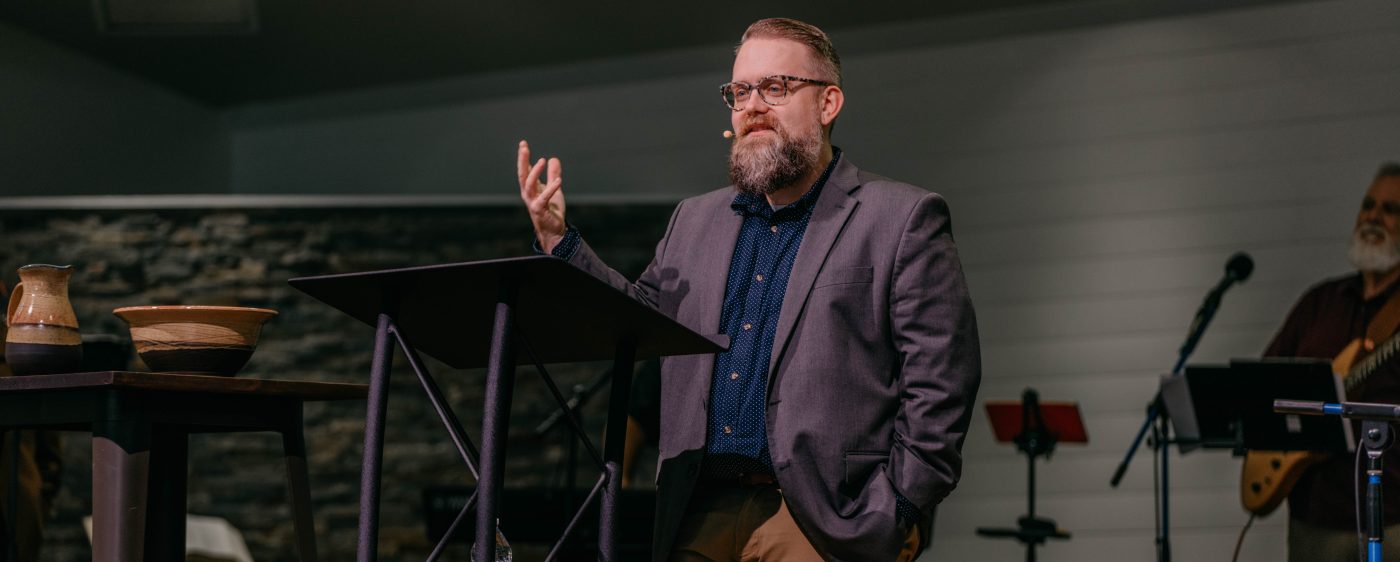
Now, as a pastor who interacts with quite a bit of folks in their teens, twenties, and thirties, I do see some of the unique problems of this generation. Extended adolescence, lack of commitment, and the inability to have certain personal interactions offline are indeed growing more common, in my opinion. But I also believe this millennial generation is bringing much needed refreshment to the Church in several ways. So in an age where everyone is blaming ‘millennial killers’, let me take a minute to mention several ways Christian millennials are life-givers.
- Nuance – Young Christians tend to be more cautious in their approach. Now certainly, we should never compromise on the Truth of God’s Word – and that is not the point. But when it comes to how we live out that truth, I see (theologically conservative) millennials who are more careful to intentionally not move beyond the Bible. Whereas the previous generations have done a good job emphasizing that we must not take away from God’s Word, the millennials are helpfully reminding us that we must also not to add to the teaching of Scripture. And the warning of Scripture seems to be severe in both regards.
- Authenticity – Millennials are helping remind us that we’re human. Which means we’re broken. We’re fallen. We’re sinful. And there seems to be a fresh wave and openness about admitting that. They don’t want overly polished Christians and communicators who ‘have all the right answers’ but never seem to struggle themselves. This is a healthy reminder because a common temptation in evangelical world is to think our witness is about how good of people we are. As if we have to have our lives ‘together’ or lost people are never going to buy our message. But the truth of the matter is, as millennials are helping us remember, evangelism and witnessing isn’t about how we have it all together, but about the fact that Jesus has it all together. If we live our lives good enough on our own, what savior are we pointing people toward? Instead, what I see is a growing embrace amongst millennials of those who are willing to admit their sins and flaws and need for Jesus. We must repent – absolutely – and that repentance is about moving back towards Jesus. And the Gospel message is rooted in that fact.
- Relational Living – Every human is relational by God’s design, but it seems like Millennials are more aware of that. There is a deep desire for community and less a desire for programs or things that feel ‘put on’. There’s entertainment everywhere, but what young people are looking for is genuine relational connection. And this is an encouragement to those of us who are older to not forget, we need to be personally invested in relationships with other people…including those who are not inherently like us. We see millennials crossing more boundaries in terms of race, ethnicity, and other differences that leads to a more relational existence. As Christians, the Gospel calls us to do precisely that. We can learn, from millennials, how to engage people who are different from us. How to love our homosexual neighbors while not compromising on the truth of God’s Word. How to understand differences of political leanings. It may be an overgeneralization, but the older generations have passed the baton on sticking to truth, but millennials are reminding us that truth without love is not really truth. You cannot separate the two. And while millennials may be tempted to swing the pendulum too far the other direction – becoming relational to a fault, even – there is much that we can learn from their God-given relational disposition. So we must press in relationally to those who are different, with patience and understanding.
- Social Justice – In terms of evangelical Christians, millennials have helped recapture a sense of urgency in terms of social justice. No, social justice is not the Gospel in and of itself. But social justice most certainly be a byproduct of the Gospel. Over the last several years, we’ve seen great organizations come on the scene, such as TOMS shoes, Invisible Children, the End It Movement, and in our state, we proudly support Tacos 4 Life. While not explicitly ‘Christian’, these organizations are finding many believing millennials partnering with them for the sake of caring for the less fortunate. Is it sin to only ‘do good works’ and never speak the Gospel words? Absolutely. But it is also sin to only speak words and never let our faith express itself through good deeds? Absolutely.
- Cultural Engagement – Oftentimes the millennial generation, as with every generation, can become so culturally absorbed it is problematic and downright sinful. But there are many younger Christian voices who are helping the older generation see the need for cultural engagement rather than cultural abandonment. We don’t need to just seclude ourselves in the Christian sub-culture, where all we do is listen to ‘Christian’ music, watch ‘Christian’ movies, read ‘Christian’ fiction, wear ‘Christian’ t-shirts, and eat Chik-Fil-A for every meal. (Although that last thing might not be so bad.) We need to see how the Gospel narrative of Creation – Fall – Redemption – Restoration is on display in the world around us, and how the work we do can better display various truths in that regard as well. As N.T. Wright says in his book Surprised By Hope, “When art comes to terms with both the wounds of the world and the promise of resurrection and learns how to express and respond to both at once, we will be on the way to a fresh vision, a fresh mission.” And the same could be said of the various spheres of society in which we live and operate. We want to see our Gospel-centrality impact how we approach the areas of finance, art, culture, politics, business, education, and so forth. A mentor of mine used to say, “We have to know the Word, and we have to know the world. Then we will know what in the world to do with the Word.” I love that I see a seriousness towards theology and biblical doctrine amongst Christian millennials, while at the same time a desire to live out those truths practically in our world. Perhaps, there is much they can teach us on how to live properly as exiles in this world.
This is certainly not an exhaustive list of the ways that millennials are actually a benefit and blessing to the Church. But my hope is that God would use these words for both the encouragement of millennial Christians to press on and the admonishment of older believers to learn from the younger. Millennials have their flaws, and they desperately need the older generation of Christians investing in them through discipleship and mentoring. But the Apostle Paul was writing to a 20-30 something young man named Timothy when he said, “Let no one despise you for your youth, but set the believers an example in speech, in conduct, in love, in faith, in purity.” (1 Timothy 4:12). So perhaps these ‘millennial killers’ can help us with putting some of our sins to death in the process.
 Ryan Broadhurst